I paused the documentary with my thumb still on the remote, as if recognition were something you could dodge by changing channels. On the screen, Bunny Yeager’s name rose again, attached to that familiar narrative: model, then photographer, then the woman behind the camera when there were few women behind the camera. I felt an old, physical click in my chest, not admiration exactly, and not envy. More like professional kinship with a stranger, the way you recognize a certain gait across a room.

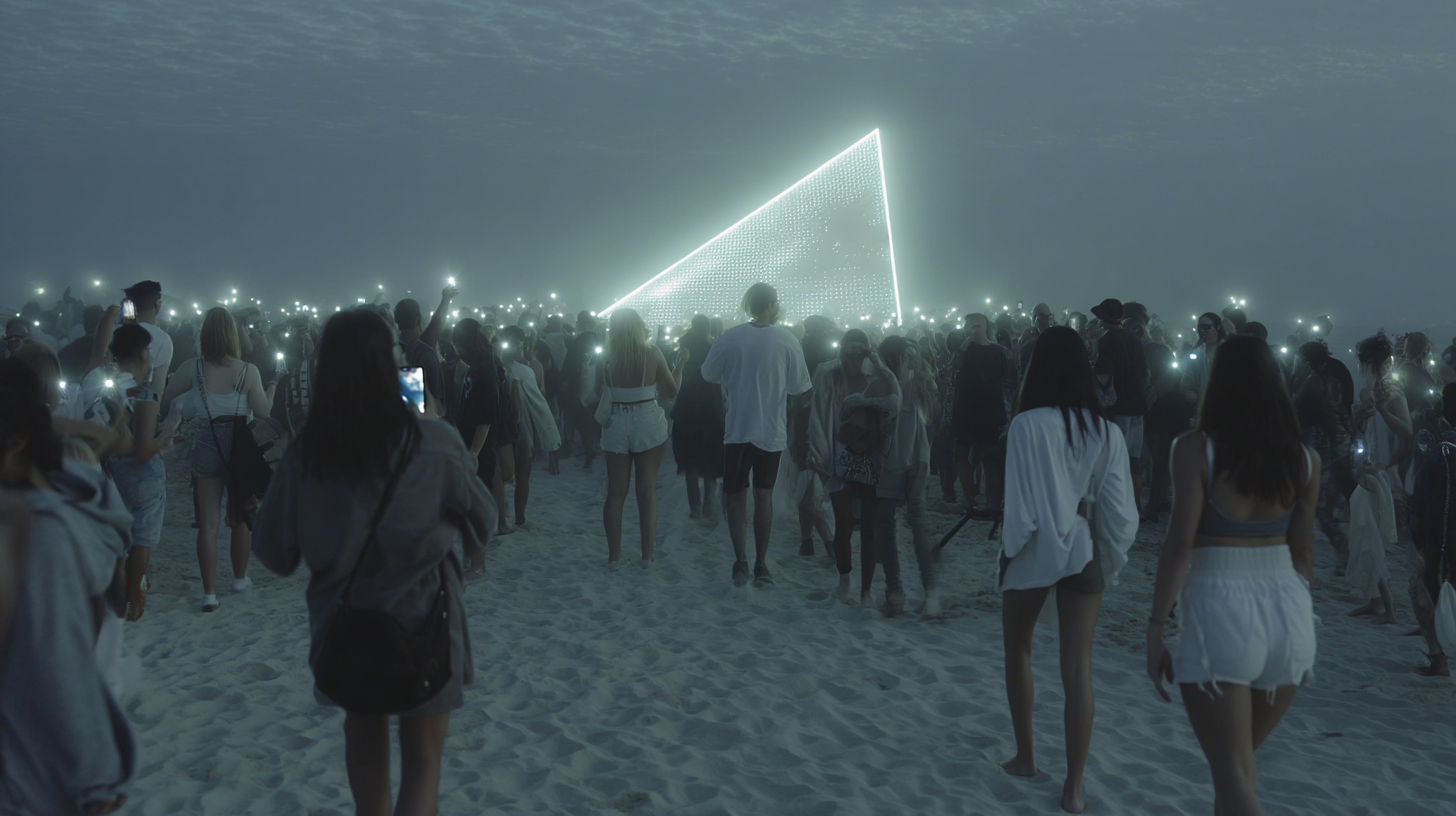
The ignition scene: recognition in real time. AI image by Maria Lankina.
It is tempting to keep it cute. She was a model, I was a model. She worked in Miami, I worked in Miami. She photographed women, I photographed women. But symmetry is not the point. It is the bait.
Watching Bunny, I recognized the job I used to do. I thought I was simply seeing beauty nobody else could see, and I was. But I was also doing something more mechanical than the romantic story I told myself. I was building the conditions for that beauty to appear. Not inventing it, not painting it on, but creating a frame where a person became legible to themselves and to everyone who would look later. The camera was never neutral. It was a system for making selves.
The camera was never neutral. It was a system for making selves.
The work, in practice, was not tidy.
I would be setting lights and “still testing,” while what I was really doing was listening. The questions came from the answers. The answers changed the questions. The subject thought we were not shooting yet. They relaxed into conversation, into the small relief of not having to pose, into the feeling of being taken seriously as a person and not as an object. And that is when the best frames often happened. The shoot had not “started,” but the photograph had already begun.

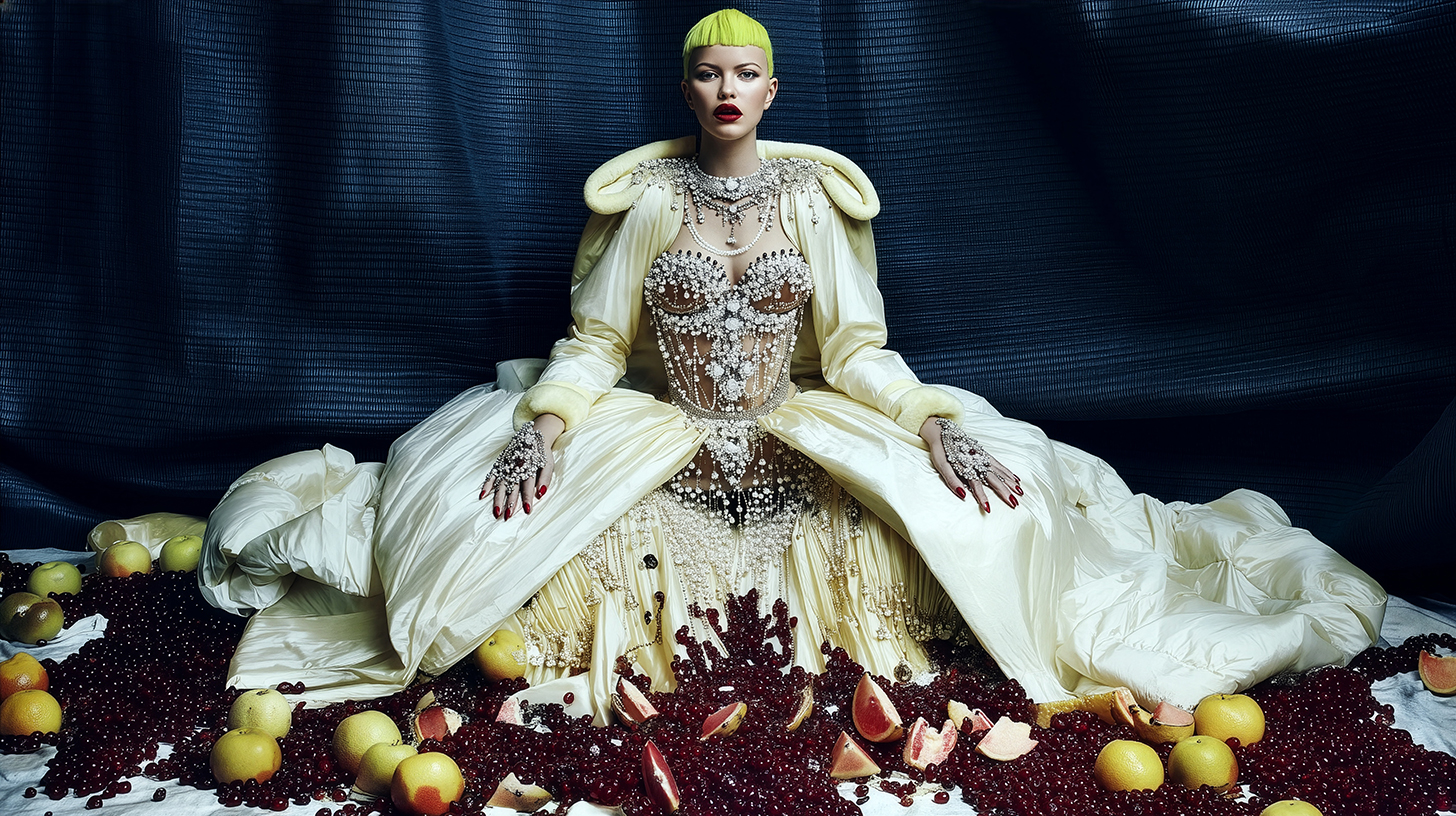
Behind the frame: attention, light, and the small architecture that makes a face believable. AI image by Maria Lankina.
The shoot had not “started,” but the photograph had already begun.
There is always a third presence in the room: the imagined future audience. Someone the subject is trying to satisfy, impress, resist, seduce, outsmart, or survive. Even if you never name it, they feel it. They are never alone with you. They are alone with you and the world.
In the documentary, someone describes Bunny’s gift with a phrase that sounds almost casual, like a rule of thumb. She could take a person on their best day and make them look a tiny bit better. The line stayed in my mind because it forced me to ask what I had actually been doing.
She could take a person on their best day and make them look a tiny bit better.
“Tiny bit better” sounds like cosmetic enhancement, like the small lie we all participate in. But the reactions I remember were not about polish. People looked surprised when they saw themselves. Not because they were flattered in the obvious way, but because the image showed them something coherent and authoritative that they had not been able to summon on command.
Bunny’s legend turns on the word transform. It suggests raw material and alchemy. But transformation, as I experienced it, was not manufacturing a person out of nothing. It was extracting a signal that was already there and amplifying it until it could be seen and believed.
Agencies sometimes sent me girls they did not know how to place. In Russian, the phrase is blunt: “ni ryba ni myaso,” not fish, not meat. They said it like a diagnosis, but what they were naming was not the girl’s lack. It was the market’s impatience. The industry wants instant categorization because categorization is how it sells. When a person does not fit the pre-made box, the box panics.
The industry wants instant categorization because categorization is how it sells.
I did not feel that panic. The agencies saw a sorting problem. I saw an opening.
I also saw beauty, constantly. Not abstract beauty, but specific beauty: the unusual distance between the eyes, the tension between softness and severity, the way a mouth closes when the person is thinking, the way the chin lifts when something true is said. “Seeing beauty” was not sentimental in practice. It was diagnostic. It was the beginning of a strategy.
I did not begin with an insider map. I did not know what editors wanted. My early exposure was glam modeling, a world with its own codes and its own blunt version of impact. High-end fashion and editorial portraiture are different species. When I started shooting seriously in 2006, I had no manual. I had a quick learning loop and a willingness to begin before I felt ready.
That willingness shaped another part of my signature: speed. I worked fast, and the result was not a rushed image. It was an image that arrived before self-consciousness could take over. Clients often believe that the longer you work, the better the result, as if time itself were proof of value. But in portraiture, time is double-edged. The longer you circle, the more the subject begins to perform the performance, and then you lose the person you came for.
The power in this, and it is power, is not mystical. It is architectural.
Light can make someone look younger without touching a single pixel.
Light can make someone look younger without touching a single pixel. Light can age them, harden them, soften them, turn them into a villain or a saint. Angle can grant authority or remove it. Height can crown someone or shrink them. A stance can become a hero shot. A fraction of a turn can decide whether the jawline reads as strength or as fear. The photographer controls the conditions under which a face becomes believable.
I did not have a name for this when I was doing it. I dressed it in romantic language because that was how I protected authorship at the time. It felt like a magical skill. Now I understand it as craft I learned intuitively, then reverse-engineered into a repeatable system. That does not make it less special. It makes it real.
This is why a photograph isn’t just an image. It is an asset with an afterlife.

A portrait does not end at the shutter. It learns to travel. AI image by Maria Lankina.
Not a legal argument, not a contract lecture, just a cultural fact. Images detach from their origin and circulate. They get used, remembered, reposted, reframed. A portrait becomes a proxy body, a public-facing self that can be deployed across contexts. And when it works, it keeps working long after the day of the shoot.
This is why the documentary’s “best day, tiny bit better” line bothered me in a productive way. It made me realize I was often doing something different. I wasn’t only polishing. I was producing presence. I was making a version of someone they could inhabit, which is why people returned for more frames. Not because they wanted “extras,” but because the image solved a problem they couldn’t solve alone: how to look like themselves with authority.
At some point while watching Bunny’s story unfold, I began thinking about Miami, not as a postcard but as an engine. Miami in the mid-2000s, my Miami, was glossy and performative, but it was not primarily a city of people trying to become someone. It was a city where people arrived as someone, or arrived to be believed as the version of themselves they had already built elsewhere. It rewarded display, reinvention, consolidation, and the strange discipline of looking effortless.
That matters because it reminds me that visibility is not only personal. It is infrastructural. Places have aesthetics the way climates have weather.
And then my thoughts spiraled away from Bunny and into something more personal, and more uncomfortable, because the infrastructure of visibility is not only aesthetic. It is also logistical.
I wrote to a friend about travel and USCIS and the anger that comes with long uncertainty. The anger is not the point. The point is the shape of the constraint.
The infrastructure of visibility is not only aesthetic. It is also logistical.
International travel is part of going “next level” as a photographer. Not always, but often. The rooms get farther away. The commissions require movement. The circuits that matter do not come to you. They require you to keep showing up in other places, again and again, until presence becomes relationship.
I was not banned from traveling. The constraint was subtler, and in some ways more effective. It was the long bureaucratic uncertainty, the sense that movement could become complicated, expensive, humiliating, risky. A horizon with a question mark attached.
And then there was my choice layered on top of that constraint, the part I do not want to romanticize. I stepped back from a particular growth track because I wanted to avoid disappointment. I did not want to build a life that depended on a freedom I could not trust. Part of it was strategy. Part of it was self-protection. Part of it was pride. If the world could take something from me, I would take it from myself first and call it agency.
This is how a bureaucracy edits a career without ever touching a camera. It does not have to censor the image. It only has to make movement feel precarious, and the artist begins to design her life around the border.
When I look at my AI practice through that lens, the word adaptation stops sounding like trend language and starts sounding like biology. I am not using AI because it is fashionable. I am using it because it allows me to build a studio that travels without paperwork. It allows me to construct bodies, atmospheres, and identities without asking permission from an airport. It allows me to photograph myself without the physical logistics that used to determine what was possible.
This is where the loop tightens: model to photographer to self-photographer. Bunny photographing herself as empowerment, me “photographing” myself through an avatar as a continuing experiment in authorship. The medium changes, but the underlying problem remains. Who gets to author the version of a person that circulates?
The avatar is both freedom and risk. It gives control over the frame, but it also tempts the mind into believing the frame is life. Total control can look like sovereignty while quietly becoming another kind of confinement. The old photographer in me recognizes the seduction of perfect conditions. The older woman in me recognizes that perfect conditions are not the same thing as reality.
Still, I cannot unsee what the documentary made visible in me. Not Bunny as a subject to analyze, but Bunny as a spark that revealed a pattern I lived without naming.
If the gaze is a technology, then it is not merely an attitude. It is an apparatus. A set of tools and conventions that convert a living person into a circulating self. The tools evolve. The distribution evolves. The question gets sharper.

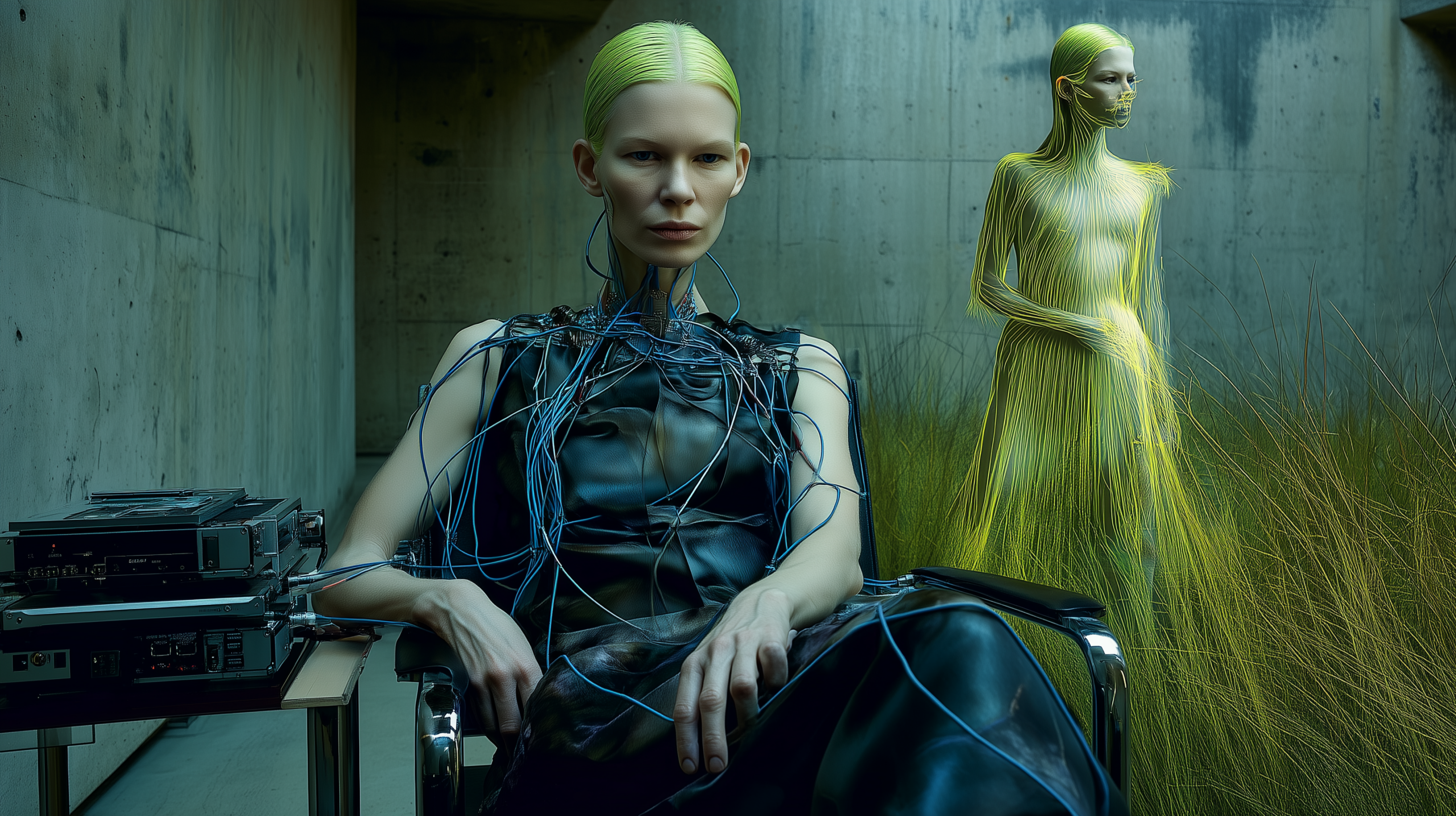
When the camera moves inside you, what exactly is being made? AI image by Maria Lankina.
What am I authoring when I build a self that can live in public, again and again, across bodies and borders and screens? And what does it mean to choose adaptation as a form of survival, when adaptation can also become a way of never returning to the road?
What am I authoring when I build a self that can live in public, again and again, across bodies and borders and screens?
References
Further Reading
→ Not Quite Me: When the Avatar Becomes True.
Image Credits & Fair Use
This essay includes low-resolution images of artworks and photographs for the sole purpose of commentary, critique, and educational analysis in accordance with fair use principles. Full credits and source links are provided. No infringement is intended, and works remain the property of their respective rights holders.
If this essay resonated with you – share it or save it.