
I admire Demna. Which is precisely why this collection troubled me.
When a designer builds authority through distortion and critique, and then pivots toward sleek seduction, the shift deserves examination. Not outrage. Examination.
Because evolution and accommodation are not the same thing.
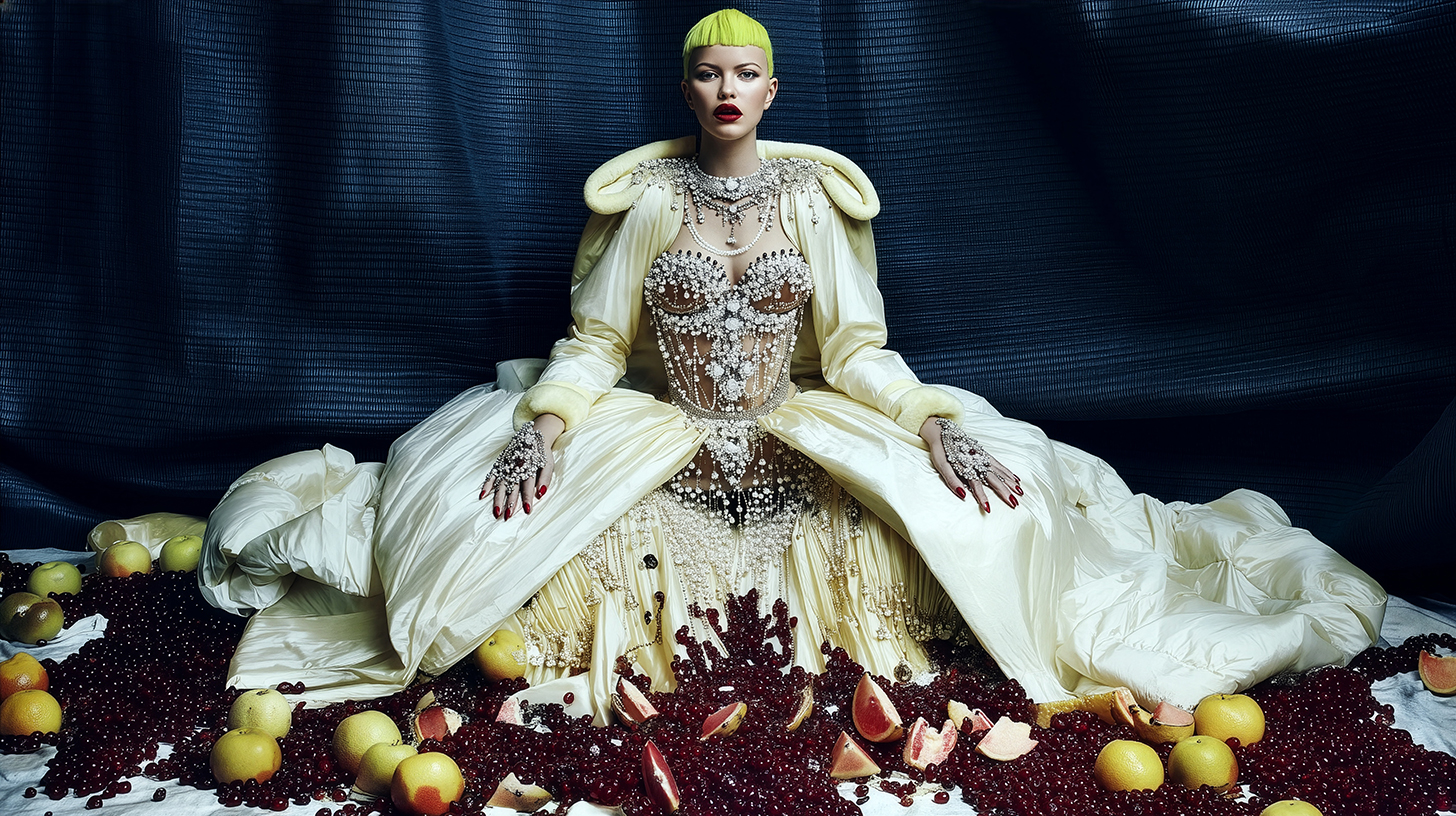
The current Gucci collection has been described as lighter, sleeker, more refined. Weightless materials. Body-hugging silhouettes. A return to line.
Weightless for whom?

The body is isolated, framed, and controlled before it is even read.
Gucci runway presentation. Courtesy of Gucci.
A dress that clings is never neutral. Liquid jersey, bias silk, second-skin tailoring—these fabrics do not disappear. They reveal. They trace. They magnify the body beneath them. On a runway silhouette they read as effortless precision. On most bodies they demand discipline. The promise is ease.
The mechanism is exposure.
“Weightless” does not remove pressure. It transfers it onto the body.
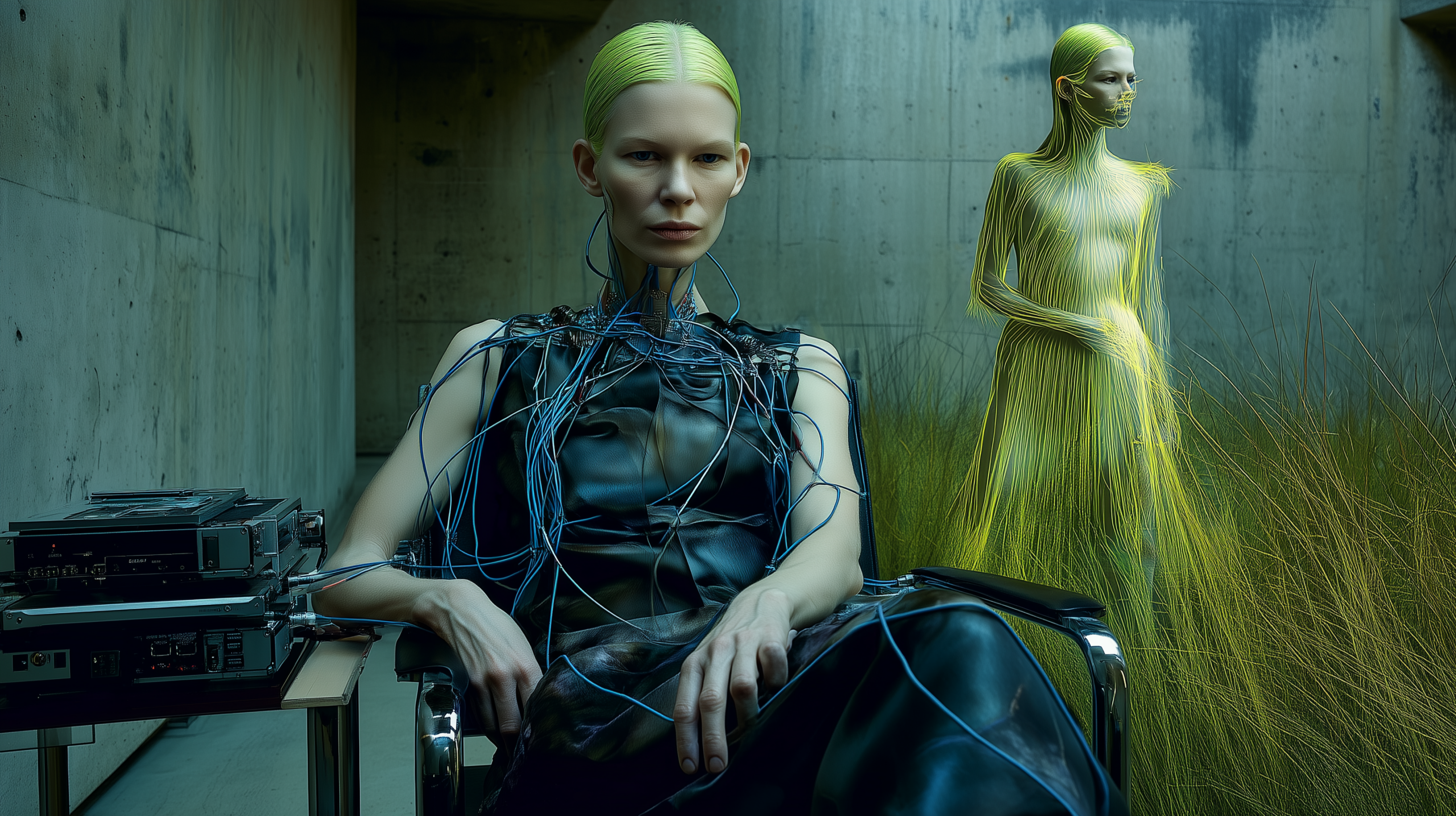
Gucci, Spring/Summer collection. Courtesy of Gucci.

The promise is ease. The mechanism is exposure.
This is not a moral argument. It is a technical one.
When Demna built his authority at Balenciaga, he destabilized luxury. Oversized tailoring, distortion, aggressive proportion shifts. The garments interrupted the body rather than flattering it.

Before refinement, there was disruption. The body was interrupted, not revealed.
Balenciaga, Demna era. Photo: Gorunway.
They felt critical, even antagonistic. They carried the aesthetic memory of post-Soviet austerity and apocalyptic humor.
The current Gucci direction feels different. Sleekness replaces distortion. Seduction replaces friction. The silhouette sharpens rather than mutates.
This is not incompetence. It is clarity.
But clarity has consequences.
When Tom Ford detonated Gucci in the 1990s, the shock was not simply the cut of a velvet suit or a silk shirt worn open to the sternum. It was institutional. The house moved from decline to dominance through high-gloss erotic minimalism. Contemporary reporting from the period, including The New York Times, documented the dramatic financial turnaround that followed.
The tailoring felt dangerous because it arrived as rupture.
Two decades later, Alessandro Michele rewrote the house again, replacing Ford’s sleek eroticism with maximalist romanticism. Vintage chaos, logo excess, theatrical eclecticism. According to Kering’s financial reports, Gucci revenues more than doubled during Michele’s peak years.
Again, aesthetic shift corresponded with structural transformation.
These were not subtle recalibrations. They were directional rewrites.
The present moment reads differently. The tailoring sharpens. The erotic code returns. Critics describe the move as archival dialogue or restoration of house DNA.
Restoration is strategic.
Restoration reassures.
Restoration stabilizes identity after maximalism.
Innovation alters syntax. Restoration reactivates it.
Innovation alters syntax.
Restoration reactivates it.
There is also a cultural undertow.
We are in a moment where thinness has been rhetorically reframed as wellness, discipline as refinement, and restraint as elegance. The garments echo that shift without naming it. They glide where previous eras might have ruptured.
Haute couture, at least historically, functioned as myth. It exceeded utility. It dramatized possibility. When couture begins to resemble elevated ready-to-wear, something mythic thins out.
Perhaps this is evolution.
Perhaps it is accommodation.
The more interesting question is not whether the collection is beautiful. It is whether it feels authored by the same mind that once weaponized distortion.
If a designer known for critique enters a house that requires stabilization, what survives of the critique?
Maybe this is Demna experimenting with seduction instead of rupture.
Or maybe this is what happens when art and balance sheet meet in full daylight.
The collection did not anger me.
It saddened me slightly.
And careful is rarely the mood that rewrites history.
Not because it failed.
But because it felt careful.
And careful is rarely the mood that rewrites history.
Further Reading
→ I Asked About Proportion. I Received Hierarchy.
Image Credits & Fair Use
This essay includes low-resolution images of artworks and photographs for the sole purpose of commentary, critique, and educational analysis in accordance with fair use principles. Full credits and source links are provided. No infringement is intended, and works remain the property of their respective rights holders.
If this essay resonated with you – share it or save it.



Leave a Reply